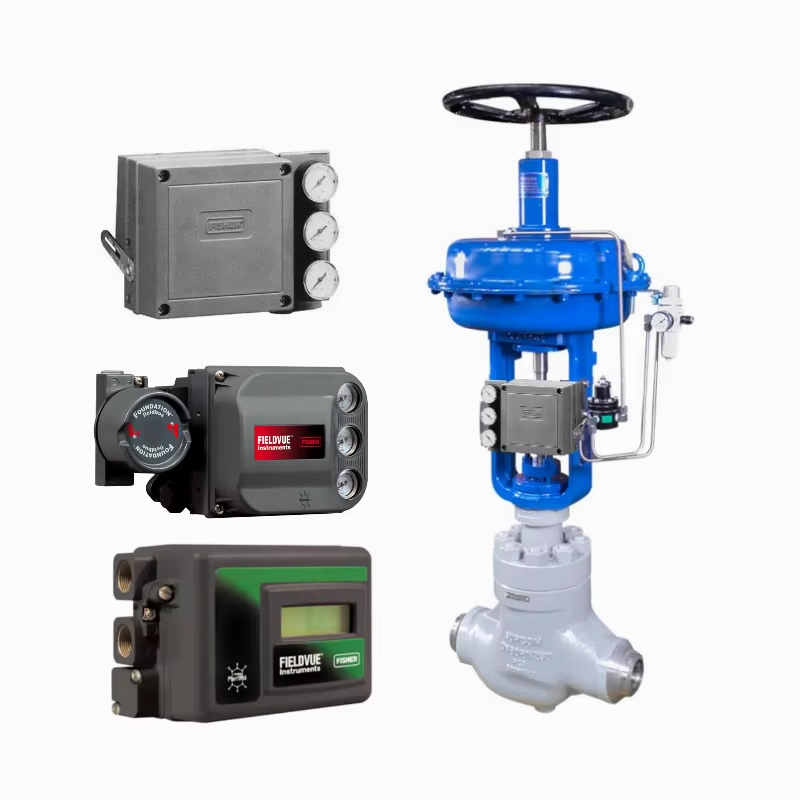
In industrial process control, valves are the unsung heroes that regulate the flow of fluids, gases, and steam throughout complex systems. However, a control valve alone, no matter how well designed, is not always capable of delivering the speed and precision required in modern industrial processes. This is where control valve positioners play a critical role.
Control valve positioners are devices designed to improve the performance, accuracy, and responsiveness of control valves. They ensure that the valve reaches the exact position demanded by the process controller, regardless of friction, pressure fluctuations, or other forces acting on the valve stem. These devices have become indispensable in applications where precision, efficiency, and reliability are paramount, such as in chemical processing, oil and gas, power generation, water treatment, and pharmaceuticals.
This article explores the concept, types, working principle, and benefits of control valve positioners in detail.
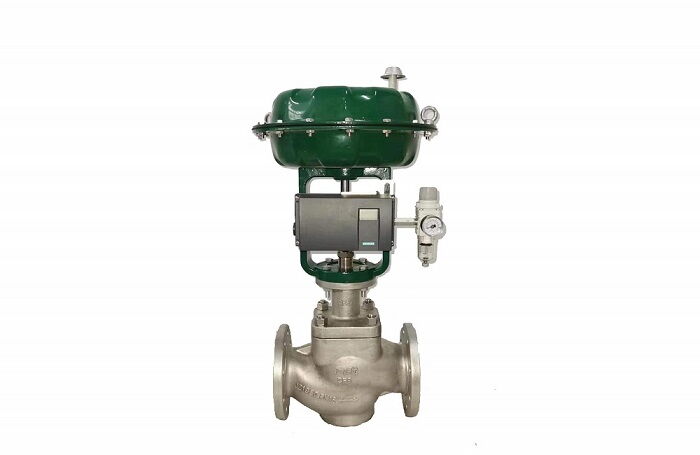
In traditional valve systems, the process controller sends a signal directly to the actuator, which mechanically moves the valve. While this system is functional, it has notable limitations. Mechanical actuators often have an inherent offset and can only achieve a certain degree of accuracy. In addition, the response time can be slow, particularly when frequent adjustments or high-precision control is required.
A control valve positioner is an intelligent intermediary that solves these problems. Positioned between the controller and the actuator, the positioner receives the control signal and adjusts the actuator accordingly. It also continuously monitors the valve stem’s actual position and compares it to the desired position. If there is any discrepancy, the positioner adjusts the actuator to correct it.
In essence, a control valve positioner ensures that the valve follows the controller’s command exactly, providing faster, more accurate, and more reliable control over process variables such as flow, pressure, temperature, and level.
A control valve positioner acts as an interpreter between the control system and the actuator assembly. The process controller sends a signal—pneumatic or electronic—to the positioner. Based on this signal, the positioner directs the actuator to move the valve to the requested position.
The positioner also measures the actual valve stem position via feedback mechanisms, such as a mechanical linkage, sensor, or electronic transducer. If the valve position differs from the commanded position due to friction, pressure fluctuations, or other external forces, the positioner adjusts the actuator until the valve aligns with the desired setpoint.
This function reduces the hysteresis and deadband of control valves. Hysteresis occurs when the valve’s position depends on its previous movement, leading to inaccuracies. Deadband is the range over which a change in input does not cause a change in output, which can reduce process control precision. By compensating for these issues, control valve positioners ensure accurate and repeatable valve performance.
In addition to improving accuracy, positioners can accelerate the valve’s response to changing process conditions. In critical processes, even minor delays in valve movement can affect product quality, safety, and efficiency. Positioners mitigate these delays by optimizing actuator motion.
Control valve positioners are broadly categorized into pneumatic, electric, electro-pneumatic, and digital (smart) positioners. Each type has distinct characteristics and applications.
Pneumatic positioners are among the oldest and most widely used types. They operate using a compressed air supply and a mechanical feedback system. A typical pneumatic positioner uses a flapper-nozzle mechanism:
The controller sends a pneumatic signal (usually 3–15 psi) to the positioner.
The signal causes a bellows or diaphragm to expand or contract.
The bellows movement shifts a flapper assembly relative to a nozzle.
The resulting pressure change drives the actuator to move the valve stem.
Feedback from the stem’s movement adjusts the air supply to achieve precise positioning.
Pneumatic positioners are simple, reliable, and suitable for hazardous environments where electrical devices might pose a risk. However, they consume more compressed air than digital alternatives and may require frequent calibration.
Electric positioners use electrical signals to control valve movement. They can operate with single-phase or three-phase alternating current (AC), or direct current (DC) voltage. Electric positioners are generally more precise than pneumatic ones and offer advantages in remote control and integration with digital control systems.
Electro-pneumatic positioners, often referred to as I/P (current-to-pressure) converters, combine electronic signals with pneumatic actuation. A typical electro-pneumatic positioner receives an analog electrical signal (commonly 4–20 mA) from the controller:
The electrical signal generates an electromotive force in a coil.
This force moves a flapper assembly that regulates air flow to the actuator.
Feedback from the valve stem adjusts the air supply to maintain the desired position.
These positioners provide the benefits of both electrical precision and pneumatic actuation power. They are particularly useful in processes where precise control is required but pneumatic actuators are already installed.
Digital positioners represent the latest evolution in valve control technology. They use microprocessors to:
Continuously monitor the valve position.
Analyze input signals and actuator response.
Optimize valve travel for speed and accuracy.
Record performance data for diagnostics and predictive maintenance.
Key advantages of digital positioners include:
High accuracy: They reduce hysteresis and deadband far more effectively than analog or pneumatic systems.
Air efficiency: They consume significantly less compressed air.
Flexible configuration: Setup can be easily modified via software, without mechanical adjustments.
Diagnostics: Online monitoring allows for condition-based maintenance, reducing unplanned downtime.
Digital positioners are ideal for critical applications where precision, reliability, and operational efficiency are essential.
While not all control valves require positioners, their advantages in many industrial processes are substantial. Here are the key benefits:
Positioners provide more precise control than actuators alone. They ensure that the valve reaches the exact position commanded by the controller, which is especially important in the lower part of the valve stroke where mechanical errors are more pronounced. Improved accuracy leads to better process control, higher product quality, and reduced material wastage.
2. Faster Response
Control valve positioners accelerate valve movement, reducing the delay between signal input and valve response. Faster response helps maintain process stability, keeping variables such as flow rate, pressure, or temperature within set limits and minimizing deviation from the setpoint.
Process conditions, such as varying differential pressure, can destabilize valve position and disrupt process control. Positioners compensate for these variations, maintaining a consistent valve position and preventing oscillations or instability in the control loop.
Positioners allow greater flexibility in control system design:
Distance between controller and valve can be increased.
Both diaphragm and piston actuators can be used.
Flow characteristics can be modified to match process requirements.
Split-ranging is possible, where one controller operates multiple valves.
This flexibility simplifies system design and makes it easier to adapt to changing process needs.
Valve stem friction contributes to hysteresis and deadband, which reduce control accuracy and productivity. Positioners compensate for friction, ensuring smooth, reliable movement regardless of wear or operating conditions.
Digital positioners provide data that can be used for predictive maintenance. Operators can detect issues such as actuator sticking, excessive friction, or air supply problems before they cause unscheduled downtime. This capability extends valve life, reduces maintenance costs, and improves overall process reliability.
Modern positioners, particularly digital ones, reduce compressed air consumption compared to traditional pneumatic systems. This efficiency translates into cost savings and reduced environmental impact in large-scale industrial operations.
Control valve positioners are used across a wide range of industries:
Chemical and Petrochemical: Precise control of reactive chemicals prevents unsafe conditions and ensures product consistency.
Oil & Gas: Valve positioners stabilize flow in pipelines, refineries, and gas processing plants.
Power Generation: Steam and water flow control in turbines and boilers relies on fast, accurate valve positioning.
Water & Wastewater Treatment: Positioners maintain precise flow and pressure control, ensuring regulatory compliance.
Pharmaceuticals & Food Processing: Maintaining tight control over temperature, flow, and pressure is critical to product quality.
In all these applications, the positioner enhances safety, reliability, and efficiency.
Choosing the right positioner depends on several factors:
Actuator type: Diaphragm or piston actuators may require different positioners.
Signal type: Pneumatic, electrical, or analog/digital input.
Environmental conditions: Temperature, humidity, hazardous locations, or corrosive environments.
Required accuracy and speed: High-precision processes may benefit from digital positioners.
Maintenance requirements: Some positioners provide advanced diagnostics and remote calibration.
Selecting the correct positioner ensures optimal performance and extends valve lifespan.
Proper installation and calibration are critical for positioner performance. Key steps include:
Mounting: Ensure the positioner is securely attached to the actuator and aligned with the valve stem.
Signal connection: Connect the positioner to the controller using the appropriate pneumatic or electrical signal.
Zero and span adjustment: Calibrate the positioner to ensure the output corresponds correctly to the input signal range.
Feedback verification: Check that the positioner accurately senses the valve stem position.
Testing: Cycle the valve through its full stroke to confirm smooth operation and proper response.
Many digital positioners simplify these steps with automated calibration and diagnostics features.
Control valve positioners are a cornerstone of modern process control. By bridging the gap between the controller and the actuator, they provide faster, more precise, and more reliable valve operation. Whether pneumatic, electric, electro-pneumatic, or digital, positioners improve process accuracy, reduce maintenance costs, and enhance system efficiency.
In industries where precision, speed, and reliability are critical, positioners are not just an option—they are a necessity. Investing in a high-quality control valve positioner ensures smoother operation, improved product quality, and greater operational safety, while also enabling predictive maintenance and energy savings.
As industrial processes continue to grow in complexity and demand higher performance, the role of control valve positioners will only become more vital. Choosing the right type of positioner, installing it correctly, and maintaining it regularly ensures that your valves perform at their best, keeping your process control system efficient, accurate, and reliable for years to come.
