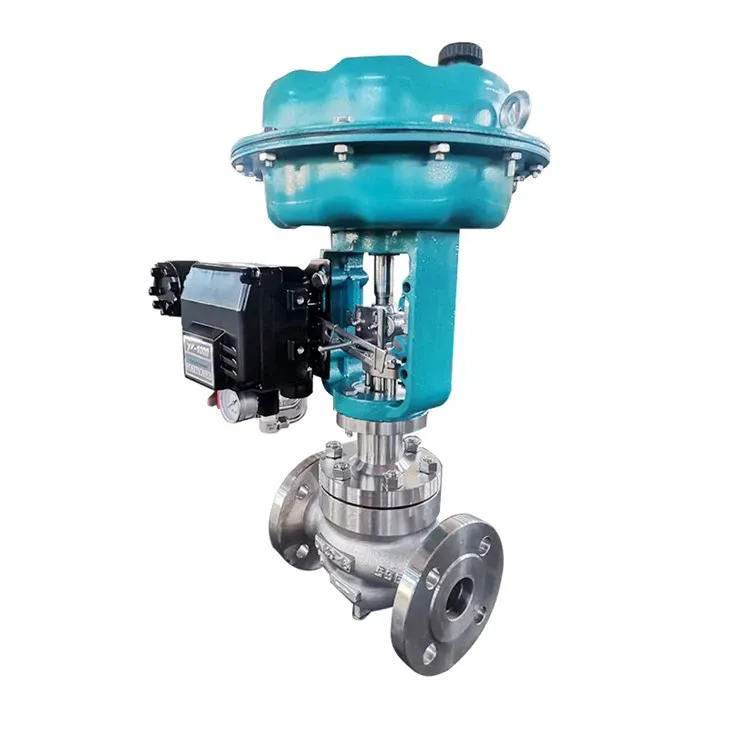
In modern industrial processes, accuracy, reliability, and safety in fluid handling are essential. Whether in chemical processing, water treatment, pharmaceuticals, power generation, or food production, controlling the flow of liquids and gases determines efficiency and operational stability. Among the many types of control valves used throughout these industries, the Pneumatic Diaphragm Control Valve has become a trusted solution due to its simplicity, durability, and dependable performance.
This type of valve uses compressed air to move a flexible diaphragm, which in turn adjusts the valve stem and regulates flow. With their excellent sealing performance, corrosion-resistant materials, and ability to handle challenging fluids—including corrosive, viscous, and particle-laden media—pneumatic diaphragm control valves have become an essential component across various process industries.
This article explores how pneumatic diaphragm control valves work, their key features, main types, benefits, and the industrial applications where they provide the greatest value.
A Pneumatic Diaphragm Control Valve is a flow-regulating valve operated by compressed air delivered to a diaphragm actuator. The diaphragm is a flexible membrane that bends upward or downward in response to air pressure. This movement adjusts the position of the valve stem, allowing the valve to modulate flow precisely.
The valve body and diaphragm design offer several performance advantages, making pneumatic diaphragm valves ideal for industries requiring precise regulation, leak-proof sealing, and compatibility with corrosive or sensitive media.
A pneumatic diaphragm control valve offers:
Simple internal structure with few moving parts
Low flow resistance and streamlined flow path
Leak-tight operation, often achieving zero leakage
Higher flow capacity compared with single-seat or cage-guided control valves of the same size
Suitability for corrosive, high-viscosity, or particle-laden fluids
Material versatility, with diaphragms available in NR, NBR, EPDM, PTFE, PFA, and FEP
Structurally, these valves consist of two main components:
Valve Body (Diaphragm Valve)
Pneumatic Actuator (Pneumatic Film Actuator)
Together, they form an efficient and dependable control solution for a wide variety of industrial processes.
Pneumatic diaphragm control valves offer several design advantages that distinguish them from conventional control valves.
The pneumatic actuator used with diaphragm valves is significantly lighter than actuators found on many traditional control valves. In fact, the total height and weight are often reduced by up to 30%, allowing for:
Easier installation
Reduced support structure requirements
Lower equipment costs
Smaller system footprint
This makes pneumatic diaphragm valves ideal for systems where space and weight are concerns.
The interior of the valve body is coated or lined with corrosion-resistant materials—such as rubber (NR, NBR, EPDM) or engineered plastics (PTFE, PFA, FEP). This prevents the working medium from contacting the metal body directly.
Benefits include:
High compatibility with strong acids, alkalis, and corrosive chemicals
Extended service life in aggressive environments
Lower maintenance and reduced risk of leakage or contamination
One of the standout features of pneumatic diaphragm valves is their ability to achieve zero leakage. The diaphragm forms a uniform seal across the valve seat when the valve closes, ensuring:
No fluid escapes
Safety is increased, especially for toxic or hazardous media
Environmental compliance is easier to maintain
This leak-tight design is especially important in chemical processing, pharmaceuticals, and industries handling dangerous fluids.
Because diaphragm valves have a simple flow path, they produce minimal internal resistance.
As a result:
The flow coefficient (Cv) is significantly larger than that of single-seat or cage-guided valves of comparable size
Energy consumption is reduced
The valve can regulate flow more efficiently
Systems benefit from stable pressure and consistent throughput
This feature makes pneumatic diaphragm valves ideal for applications requiring high flow rates with minimal pressure loss.
A pneumatic diaphragm control valve operates based on the principle of air pressure applied against a flexible diaphragm.
Compressed air enters the actuator
Air is fed into the diaphragm actuator through an air supply line.
The diaphragm flexes under pressure
As the air pressure increases, it forces the diaphragm to move. This motion is directly transmitted to the valve stem.
Valve stem movement regulates flow
When the diaphragm pushes the stem downward, the valve closes.
When air pressure is released or reduced, the diaphragm retracts, and the valve opens (or vice versa depending on valve design).
Precise, smooth modulation
The diaphragm’s flexibility and large surface area provide excellent accuracy, making the valve suitable for throttling and modulation tasks.
The use of compressed air offers numerous benefits:
Fast response time
Safe operation in flammable or explosive environments
High reliability with minimal maintenance
Smooth transitioning between different flow levels
Compatibility with automated control systems
These performance characteristics make pneumatic diaphragm valves well-suited to complex industrial control systems.
Industrial requirements vary widely, so pneumatic diaphragm control valves are available in multiple designs to meet diverse applications. Below are the primary types used across industries.
This is the most commonly used configuration, designed for basic on/off or throttling functions. Standard diaphragm valves provide:
Reliable performance
Cost-effective flow control
Good compatibility with a wide range of fluids
Simple operation and maintenance
They are widely used in water treatment plants, chemical lines, food processing, and general industrial applications.
Fail-safe valves are designed for critical systems where safety is a priority. They automatically return to a preset position (open or closed) when air supply fails.
Fail-safe features include:
Fail-closed design: Valve automatically closes during air failure
Fail-open design: Valve automatically opens during air failure
Fail-in-place design: Valve remains in last position when air is lost
These valves are ideal for:
Hazardous chemical systems
High-temperature processes
Industrial safety loops
Emergency shutdown systems
Fail-safe mechanisms enhance equipment safety and protect workers and assets.
Also known as air-operated process valves, these valves use air pressure to control fluid movement through the diaphragm. They provide:
High durability
Precise regulation of gases and liquids
Smooth operation in systems requiring continuous modulation
Common applications include:
Sanitary and hygienic processes
Chemical transfer systems
Semiconductor manufacturing
Compressed air and gas distribution lines
These valves excel in systems requiring consistent flow control and reliable pressure management.
Designed specifically for high-pressure environments, these valves can withstand elevated operating pressures without compromising sealing performance or diaphragm integrity.
Features include:
Reinforced diaphragm materials
Robust actuator design
Heavy-duty valve bodies
Enhanced sealing mechanisms
Typical usage includes:
Power generation
Petrochemical facilities
Oil and gas processing
Pressure-intensive chemical reactions
High-pressure diaphragm valves provide stability and precision in demanding industrial processes.
Thanks to their versatility and performance capabilities, pneumatic diaphragm control valves are widely used across numerous industries.
Common Application Sectors
Corrosive and hazardous fluids
Acid and alkali processing
High-temperature chemical reactions
Diaphragm valves’ corrosion resistance and zero-leakage design make them ideal for such environments.
Flow control of clean or contaminated water
Chemical dosing systems
Filtration and sedimentation processes
The valves’ ability to handle suspended particles and sludge is particularly beneficial.
Sterile and hygienic processing
CIP/SIP systems
Purified water and clean steam lines
Diaphragm valves prevent contamination and ensure precise control.
Hygienic fluid handling
Beverage mixing and flavor injection
Dairy and brewing processes
Non-metallic linings and smooth flow paths prevent contamination and preserve product purity.
High-pressure steam
Cooling water circuits
Chemical feed and dosing lines
The valves withstand pressure variations and offer reliable modulation.
True zero-leakage sealing protects equipment, personnel, and the environment.
Flexible diaphragm materials support aggressive fluids, making the valves suitable for corrosive and hazardous applications.
Simple structure reduces wear and maintenance, ensuring long service life.
Pneumatic operation integrates easily with industrial automation and distributed control systems.
Pneumatic actuators pose no ignition risk, making them perfect for explosive or flammable environments.
Pneumatic diaphragm control valves have become indispensable in industries that require precise flow control, exceptional sealing, and high chemical resistance. Their simple design, robust operation, and versatility make them suitable for everything from basic on/off duties to complex, high-pressure control systems. Whether handling corrosive fluids, viscous slurries, pure water, or sensitive media, these valves deliver consistent performance and long-term reliability.
As industrial processes continue to advance toward greater automation, efficiency, and safety, pneumatic diaphragm control valves will remain a critical technology—ensuring smooth, accurate, and dependable flow control for countless applications around the world.
