Electric 3-Way Control Valves: Efficient Solutions for Complex Pipeline Systems
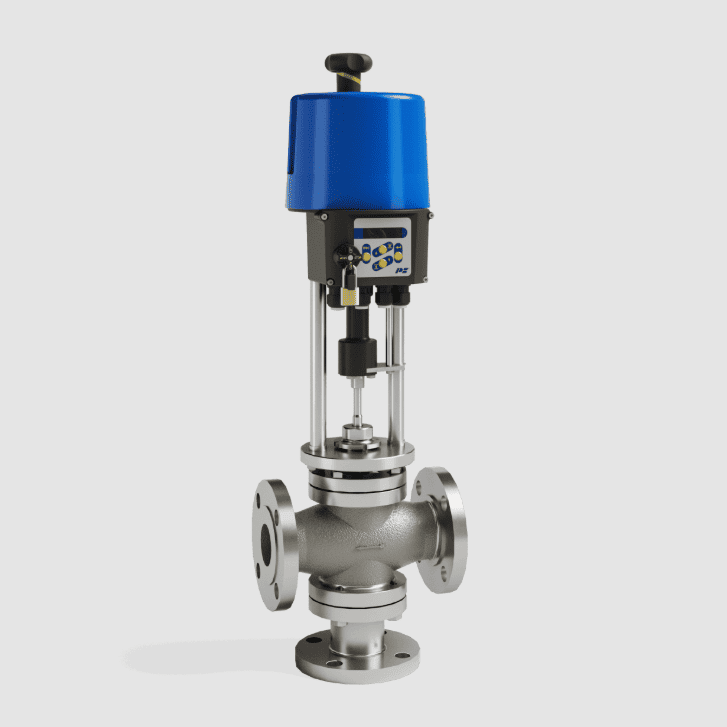
As industrial systems become increasingly automated and efficiency-driven, the demand for precise, reliable, and adaptable flow control devices continues to grow. Among the most versatile solutions in modern control technology is the electric three-way control valve. Designed to regulate, mix, or divert fluid streams within a single valve body, this advanced device offers a compact alternative to traditional two-valve arrangements while delivering superior performance in complex control applications.
Electric three-way control valves are widely used in industries such as oil and gas, power generation, chemical processing, HVAC, water treatment, and manufacturing. Their ability to accurately manage pressure, flow rate, temperature, and liquid level makes them an essential component in both new installations and system upgrades. By integrating electric actuation with innovative valve body and spool designs, these valves provide stable operation, low energy loss, and long-term reliability under demanding conditions.
This article explores the design principles, operating structures, performance features, and application advantages of electric three-way control valves, with a focus on their converging and diverging configurations, internal components, and role in advanced automatic control systems.
An electric three-way control valve is a flow-regulating device that manages the movement of fluids through three ports instead of the two found in conventional control valves. By controlling how fluid enters, exits, or is distributed between pipelines, a three-way valve can perform functions such as mixing, diverting, or bypassing flow.
Unlike manually operated valves, electric three-way control valves are actuated by electric actuators that respond to control signals from automation systems. This allows for continuous modulation rather than simple on/off operation, enabling precise adjustment of process variables in real time.
One of the most significant advantages of this valve type is its ability to replace two separate two-way valves in many systems. By combining functions into a single compact unit, it simplifies piping layouts, reduces installation space, lowers maintenance requirements, and improves overall system efficiency.
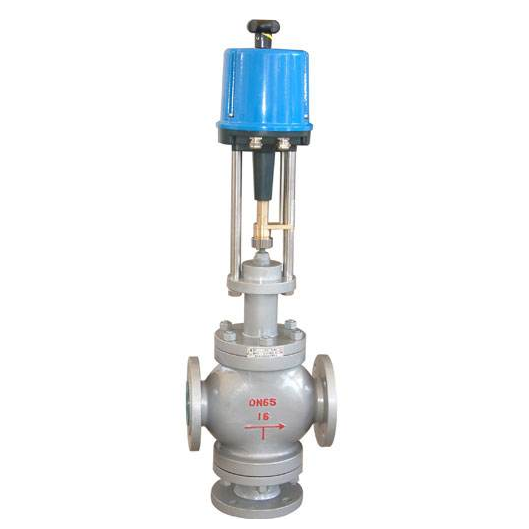
Electric three-way control valves are generally available in two primary structural configurations: converging and diverging. Each design serves a specific purpose within a fluid control system.
In a converging structure, two inlet ports combine into one outlet. The valve controls how much fluid from each inlet is allowed to pass, effectively mixing two streams into a single output. This configuration is commonly used in temperature control applications, where hot and cold fluids must be blended to achieve a desired output temperature.
Typical uses of converging three-way valves include:
- Heat exchanger temperature regulation
- Oil and gas process heating systems
- Industrial cooling circuits
- Chemical blending operations
The electric actuator adjusts the position of the internal valve cores, precisely controlling the ratio of the two incoming flows. This ensures stable output conditions even when inlet temperatures or pressures fluctuate.
In a diverging structure, one inlet is split into two outlets. The valve directs the incoming fluid to one or both outlets based on control signals. This configuration is ideal for applications that require flow distribution, bypass control, or load balancing.
Common applications for diverging valves include:
- Redirecting flow between parallel pipelines
- Bypass control in heat exchange systems
- Managing flow to different process units
- Load distribution in automated production lines
By accurately controlling the direction and proportion of flow, diverging three-way valves improve operational flexibility and system responsiveness.
At the heart of an electric three-way control valve is its double valve core structure with upper and lower guiding. This design allows the valve to simultaneously regulate two flow paths with a single actuator movement.
The valve incorporates two precisely machined valve cores, positioned in an upper and lower arrangement. These cores are guided by side supports that ensure:
- Accurate alignment during movement
- Stable operation under varying pressures
- Minimal wear on sealing surfaces
This structure enables smooth modulation of flow in both converging and diverging operations, allowing the valve to respond quickly and accurately to control signals.
The electric actuator is equipped with a multiple spring mechanism that enhances:
- Return accuracy
- Positioning stability
- Fail-safe functionality
In the event of power loss or system fault, the spring system ensures the valve returns to a predetermined safe position, maintaining process safety and protecting downstream equipment.
One of the defining advantages of electric three-way control valves is their ability to replace two separate two-way control valves in many process configurations. This consolidation offers multiple benefits:
By using a single three-way valve instead of two individual valves, system designers can:
- Simplify piping layouts
- Minimize the number of flanges and connections
- Reduce potential leak points
This leads to faster installation, fewer components, and lower overall project costs.
With two two-way valves, maintaining synchronized control can be challenging. A three-way valve ensures that both flow paths are regulated by a single actuator, providing:
- Balanced flow control
- Elimination of control conflicts
- More stable process conditions
Fewer components mean:
- Reduced inspection and servicing time
- Lower spare parts inventory
- Decreased long-term maintenance costs
For facilities seeking operational efficiency and reliability, the three-way design represents a smart engineering solution.
Electric three-way control valves are engineered with a range of performance features that make them suitable for demanding industrial environments.
Despite their multifunctional capability, these valves feature a compact and lightweight construction, allowing easy installation in space-constrained environments. This makes them particularly valuable in retrofit projects where existing piping layouts limit available space.
The electric actuator provides fast and accurate response to control signals. Combined with the dual-core structure, the valve offers:
- High positioning accuracy
- Stable modulation of flow
- Consistent performance under fluctuating operating conditions
This sensitivity is essential in applications such as temperature regulation, where even minor deviations can affect product quality or system efficiency.
Optimized internal flow paths minimize turbulence and resistance, resulting in low pressure drop across the valve. This improves overall energy efficiency and reduces the workload on pumps and compressors.
Modern electric three-way control valves are designed to withstand:
- High operating pressures
- Significant pressure differentials
- Large flow volumes
This makes them suitable for heavy-duty industrial processes, including oil refining, petrochemical production, and power generation.
Through precision engineering and advanced control algorithms, these valves provide predictable and linear flow characteristics. This ensures reliable control over a wide operating range, supporting both fine-tuned adjustments and large-scale flow regulation.
The modular construction of electric three-way control valves allows for:
- Easy access to internal components
- Simplified replacement of seals and spools
- Reduced downtime during servicing
Maintenance-friendly design is a key factor in minimizing lifecycle costs and maximizing equipment availability.
The internal spool structure is supported by side guiding mechanisms, which:
Prevent misalignment under high differential pressure
Reduce mechanical wear
This results in long service life and consistent performance even in continuous operation.
Vibration-Free and Low-Noise Operation
Electric three-way control valves are designed to operate with minimal vibration and noise. Smooth internal flow paths and precise actuation reduce turbulence, making these valves ideal for:
HVAC systems in commercial buildings
Process environments where noise control is essential
Sensitive laboratory and medical facilities
Quiet operation not only improves working conditions but also protects surrounding equipment from vibration-related wear.
In converging configurations, electric three-way control valves are capable of handling high pressure differences without compromising stability or control accuracy. This allows them to be used in demanding applications where pressure conditions fluctuate significantly.
In the oil and gas sector, electric three-way control valves are widely used in:
Heat exchange systems
Crude oil processing
Gas treatment and conditioning
Temperature regulation in refining operations
Their ability to mix or divert flow with high accuracy makes them ideal for maintaining stable process conditions in complex thermal systems.
Power plants rely on precise temperature and flow control to optimize efficiency and protect critical equipment. Electric three-way valves are used in:
Boiler feedwater systems
Cooling circuits
Turbine auxiliary systems
Their reliable performance under high pressure and temperature conditions ensures safe and efficient power generation.
In chemical plants, accurate control of fluid mixing and distribution is essential for product consistency and safety. Electric three-way control valves support:
Reactant blending
Temperature management in reactors
Flow distribution between process units
Their corrosion-resistant materials and precise modulation capabilities make them suitable for aggressive chemical environments.
In commercial and industrial HVAC systems, these valves play a central role in:
Temperature control for heating and cooling circuits
Bypass regulation in chilled water systems
Energy optimization in automated building management systems
By enabling precise control of thermal flow, electric three-way valves contribute to energy savings and occupant comfort.
Water and wastewater treatment facilities use electric three-way control valves for:
Flow balancing
Chemical dosing control
Temperature and pressure regulation
Their durability and low maintenance requirements make them well-suited for continuous operation in utility infrastructure.
While both configurations offer versatility, it is important to understand their limitations and proper application.
For small nominal sizes and low pressure differentials, a converging control valve may sometimes be used in a diverging application. This flexibility can simplify inventory and system design in certain scenarios.
However, when:
The nominal size exceeds DN100, and
The system operates under high pressure differentials,
converging and diverging control valves are not interchangeable. Each configuration is engineered for specific flow dynamics, and improper selection may result in:
Unstable control
Excessive wear
Increased noise and vibration
Reduced service life
Proper valve selection based on system requirements is essential to ensure safe and reliable operation.
Electric three-way control valves integrate seamlessly with modern automation systems, including:
Distributed control systems (DCS)
Programmable logic controllers (PLC)
Building management systems (BMS)
This connectivity enables centralized monitoring, remote operation, and real-time optimization.
By minimizing pressure loss and enabling precise flow modulation, these valves contribute to:
Reduced pumping energy
Optimized heat transfer
Lower overall operational costs
Energy efficiency is a critical consideration in today’s industrial and commercial environments, where sustainability and cost control are top priorities.
Fail-safe actuator designs, robust internal structures, and stable flow characteristics enhance system reliability and protect against operational risks. In safety-critical applications, these features are essential for maintaining process integrity.
Correct installation is vital to ensure optimal performance. Key considerations include:
Matching valve configuration (converging or diverging) to system requirements
Ensuring proper alignment of ports
Allowing sufficient space for actuator operation and maintenance access
After installation, valves should be:
Calibrated to match control signals
Tested under operating conditions
Integrated into the control system for accurate feedback and response
Although electric three-way control valves are designed for durability, periodic inspection is recommended to:
Check sealing surfaces
Verify actuator performance
Ensure smooth spool movement
Preventive maintenance extends service life and maintains consistent control accuracy.
As automation technology continues to advance, electric three-way control valves are evolving to meet new demands:
Smarter actuators with built-in diagnostics and self-calibration
Digital communication protocols for seamless integration with Industry 4.0 systems
Enhanced materials for higher temperature, pressure, and corrosion resistance
Compact high-capacity designs to meet space and performance requirements
These innovations will further strengthen the role of electric three-way control valves in next-generation industrial control systems.
Electric three-way control valves represent a powerful and versatile solution for modern process control. With their converging and diverging configurations, dual-core design, and precise electric actuation, they offer reliable regulation of pressure, flow, temperature, and liquid level across a wide range of applications.
By replacing multiple two-way valves with a single compact unit, these valves simplify system design, reduce installation and maintenance costs, and enhance operational stability. Their robust construction, low pressure loss, accurate flow characteristics, and compatibility with automated control systems make them indispensable in industries such as oil and gas, power generation, chemical processing, HVAC, and utilities.
As industrial automation continues to expand, electric three-way control valves will remain a cornerstone of efficient, intelligent, and sustainable flow control—delivering the performance and reliability that modern systems demand.
