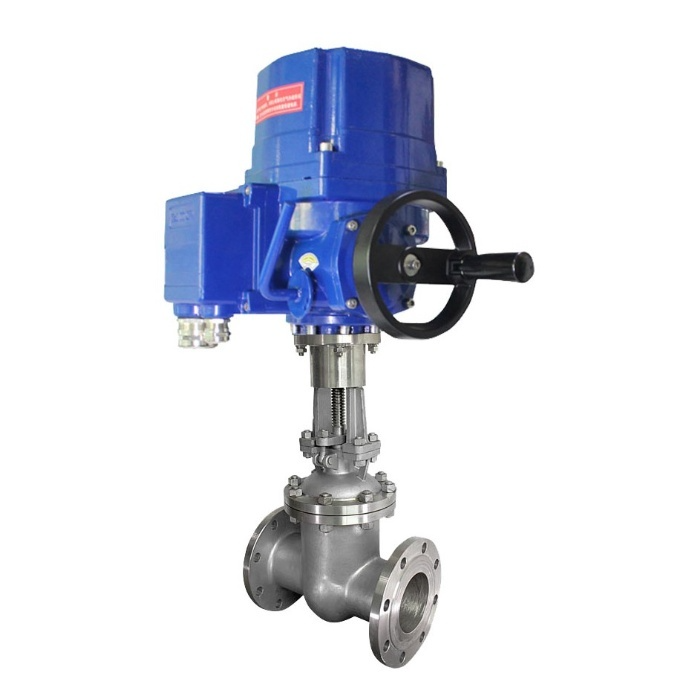
The industrial sector is undergoing a profound transformation driven by automation, digital monitoring, and safety regulations. In parallel, the adoption of electric actuated gate valves is accelerating as manufacturers, utilities, and process operators recognize the value of precision, reliability, and remote operation in fluid handling systems. These valves merge the traditional performance of gate valves with the advantages of electric actuation, providing operators with a solution that improves efficiency, safety, and operational flexibility.
From water treatment and petrochemical facilities to power plants and district heating systems, electric actuated gate valves are becoming indispensable components in modern pipelines. This article examines their design principles, operational benefits, technical specifications, applications, installation, maintenance, market trends, and future development, offering a comprehensive perspective for engineers, procurement specialists, and industry professionals.
A gate valve is a linear motion valve designed to start or stop fluid flow. The primary component is a gate or wedge that moves perpendicular to the flow direction. When fully open, the gate retracts into the valve body, offering minimal flow resistance, while full closure ensures a tight seal. Unlike globe or ball valves, gate valves are not recommended for throttling, as partial openings may cause turbulence, vibration, or seat damage.
Traditional gate valves rely on manual operation, which can be labor-intensive and time-consuming in large or hazardous installations. Electric actuators automate the operation, using electric motors to rotate the valve stem, moving the gate with precision. Actuators can be integrated with PLC, SCADA, or DCS systems, enabling remote monitoring, control, and automation of critical processes.
Key advantages of electric actuation include:
- Remote operation: Eliminates the need for manual intervention in dangerous or hard-to-access areas.
- Repeatable performance: Ensures consistent valve positioning.
- Integration with smart control systems: Supports predictive maintenance and automated process control.
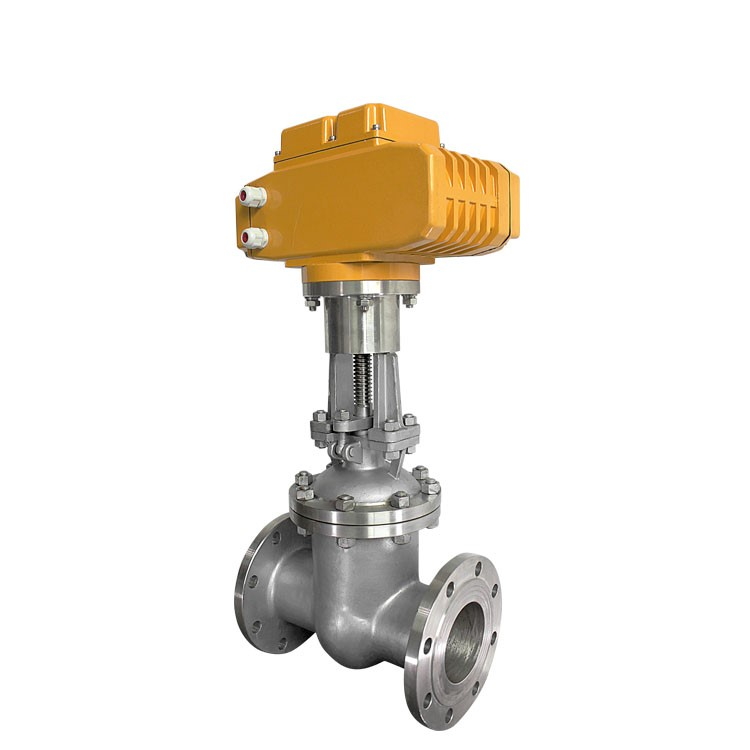
An electric actuated gate valve system consists of several critical components:
- Valve Body: Typically made of carbon steel, stainless steel, or alloy materials to handle various pressures, temperatures, and chemical environments.
- Gate (Wedge): Available as solid or flexible wedges, designed to provide tight sealing under different operating conditions.
- Stem: Transmits torque from the actuator to the gate; precision threading ensures smooth operation.
- Electric Actuator: Contains the motor, gearbox, limit switches, and control electronics. Advanced actuators feature feedback sensors, torque monitoring, and communication interfaces.
- Bonnet and Packing: Ensures a leak-free seal around the stem and protects internal components.
- Optional Accessories: Manual override, position indicators, local control panels, and protective enclosures.
Stem rises as the valve opens, providing a visual indication of valve position.
Easier to maintain packing due to exposed threads.
Requires sufficient vertical space for full stem movement.
Stem rotates but does not move axially.
Suitable for tight spaces where vertical clearance is limited.
Valve position is determined via position indicators or actuator feedback.
Solid wedge: Robust, ideal for high-pressure and high-temperature applications.
Flexible wedge: Provides slight deformation to accommodate thermal expansion or uneven seat surfaces, enhancing sealing performance.
Electric actuation allows valves to be operated from control rooms or remote locations, which is critical for pipelines in hazardous, hard-to-reach, or expansive industrial sites. Integration with SCADA or DCS systems enables centralized monitoring, remote opening/closing, and emergency shutdown sequences.
Actuators deliver consistent torque and accurate positioning, reducing wear on gate and seats. This precision is particularly important in chemical, power, and water treatment applications, where flow accuracy impacts process efficiency and safety.
Automation minimizes personnel exposure to high-pressure fluids, steam, chemicals, or extreme temperatures, reducing accident risk. Electric actuators can include over-torque protection and emergency stop features to further enhance operational safety.
Modern electric actuators optimize power consumption, operating the motor only as needed to move the gate. This results in lower operational costs compared to continuously running systems.
Electric actuated gate valves are extensively used in pumping stations, filtration systems, and distribution networks, allowing operators to control large-diameter pipelines efficiently and reliably.
In oil, gas, and petrochemical pipelines, these valves manage the flow of crude oil, refined products, and natural gas. Electric actuators facilitate remote monitoring of pipeline networks and enable fast response to emergency shutdown requirements.
Used in steam lines, cooling circuits, and feedwater systems, electric actuated gate valves help optimize efficiency and prevent downtime. Integration with plant control systems allows automated load balancing and emergency isolation.
Handling corrosive or toxic fluids requires robust materials like stainless steel or alloyed metals. Electric actuated gate valves provide both reliable isolation and remote operation, minimizing risks for plant personnel.
Large heating and cooling networks utilize these valves to regulate hot water, chilled water, and steam flow, enhancing system efficiency and reducing manual operation requirements.
Material selection depends on pressure, temperature, and fluid compatibility:
- Carbon Steel (ASTM A216 WCB) – Common in general industrial applications.
- Stainless Steel (ASTM A351 CF8/CF8M) – Corrosion-resistant for chemical or marine applications.
- Alloy Steel (ASTM A217 WC6/WC9) – Suitable for high-temperature, high-pressure pipelines.
Industry compliance ensures reliability:
- API 600 & API 6D – Standardized gate valve design.
- ISO 5211 – Actuator mounting interface.
- ANSI/ASME B16.34 – Pressure-temperature ratings.
- CE & ATEX – Certifications for hazardous environments.
Proper installation is essential to ensure the optimal performance, safety, and longevity of electric actuated gate valves. These valves integrate both mechanical and electrical components, so even minor installation errors can lead to misalignment, premature wear, or actuator failure. To achieve reliable operation, several key considerations must be followed.
- Pipeline Alignment – Ensure the connected pipeline is properly aligned to prevent mechanical stress on the valve body and actuator. Misalignment can cause uneven wear, leakage, and actuator overload.
- Flange and Pressure Class Compatibility – Verify that the valve flanges match the pipeline connections and that the pressure ratings are suitable for the operating conditions. Improper matching may compromise sealing performance and overall safety.
- Actuator Access – Provide sufficient space for wiring, manual operation (if equipped with an override), and maintenance activities. Restricted access can make troubleshooting and servicing difficult, increasing downtime.
- Actuator Configuration – Confirm that torque settings, control signal compatibility, and electrical voltage match the actuator and system requirements. Incorrect configuration can damage the actuator or prevent the valve from achieving full open or closed positions.
- Pre-Commissioning Tests – Before putting the system into operation, test the valve and actuator for smooth, full-range movement. Check for binding, unusual noises, or resistance, which could indicate installation issues or mechanical defects.
Electric actuated gate valves generally require minimal maintenance but benefit from regular inspection to ensure long-term reliability:
- Visual Inspection – Check for leaks, corrosion, or physical damage to the valve body, actuator, and connections. Early detection of issues can prevent costly downtime.
- Lubrication – Apply light lubrication to stem threads and actuator gears if recommended by the manufacturer. This reduces friction and ensures smooth operation.
- Electrical Checks – Verify that all connections are secure, and confirm proper signal feedback from sensors or control systems.
- Functional Testing – Periodically operate the valve through its full travel range to confirm smooth, consistent movement and proper sealing.
Even with proper installation and maintenance, occasional problems may arise:
- Valve Fails to Fully Open/Close – Check actuator torque, wiring, and for mechanical binding.
- Leaks Around the Stem – Inspect packing, gland, and seals for wear or improper installation.
- Actuator Malfunction – Verify electrical supply, control signals, and actuator calibration.
Following these guidelines ensures long-term reliability, efficient operation, and reduced risk of unexpected failures, even in demanding industrial environments. Regular maintenance and correct installation not only extend the service life of the valve but also optimize safety and operational efficiency.
Global demand for electric actuated gate valves is rising due to:
Increasing automation in industrial and municipal processes.
Expansion of water, power, and chemical infrastructure.
Emphasis on remote operation, safety, and energy efficiency.
Advancements in smart actuators and predictive maintenance technologies.
Manufacturers are responding with high-performance actuators, IoT integration, and modular valve designs to meet evolving market needs.
Electric actuated gate valves are expected to continue growing in popularity as industries seek:
Greater automation and process control
Energy-efficient solutions
Reliable operation under high-pressure, high-temperature, or corrosive conditions
Emerging trends include smart diagnostics, remote monitoring, predictive maintenance, and enhanced actuator efficiency, ensuring these valves remain critical components in industrial pipelines worldwide.
Water Utilities: Automated remote isolation during emergencies, reducing downtime and labor costs.
Oil Pipelines: Electric actuated gate valves enable rapid emergency shutdowns, enhancing environmental and safety compliance.
Power Plants: Automated valves improve steam flow regulation, reducing energy losses and improving plant efficiency.
Electric actuated gate valves represent the intersection of proven mechanical design and modern automation technology. By combining precision, reliability, and remote operability, these valves provide safe, efficient, and durable flow control for industrial pipelines worldwide. With proper installation, routine maintenance, and integration into control systems, they deliver long-term operational efficiency, meeting the demands of today’s automated industrial landscape.
As industries continue to modernize and adopt digital control systems, electric actuated gate valves will remain a cornerstone of safe, efficient, and reliable fluid management, supporting sustainable growth across multiple sectors.
