Industrial Guide to Self-Operated Globe Control Valves
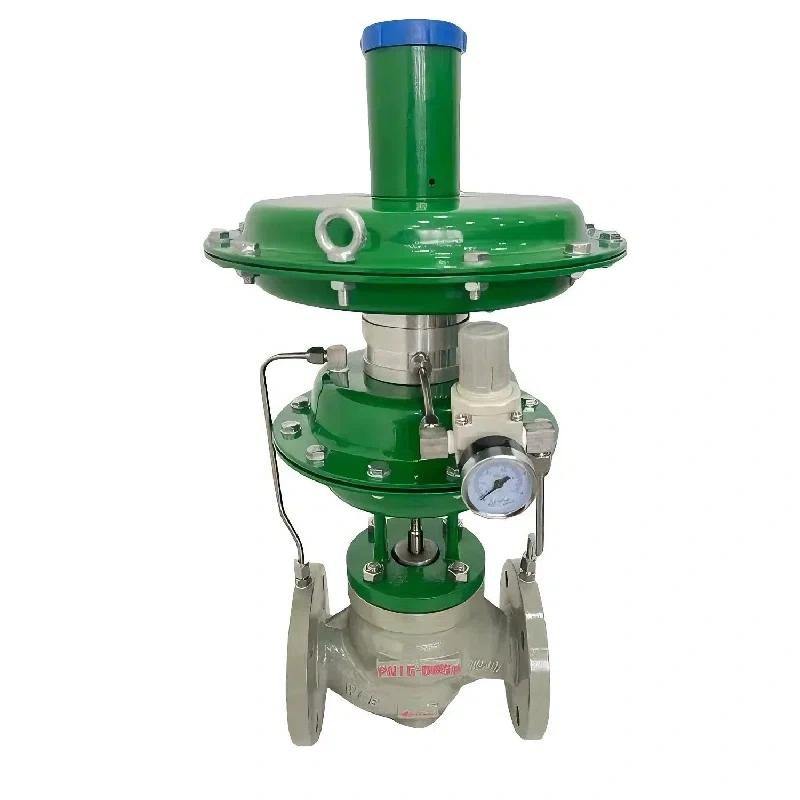
In modern industrial automation and fluid control systems, efficiency, reliability, and energy conservation have become critical priorities. Among the many innovations designed to meet these demands, the self-operated globe control valve stands out as a highly practical and cost-effective solution. Unlike traditional control valves that rely on external power sources such as electricity or compressed air, self-operated valves utilize the energy of the process medium itself to regulate flow, pressure, or temperature.
This unique operating mechanism not only simplifies system design but also reduces operational costs, improves safety, and enhances reliability in remote or power-limited environments. As industries continue to move toward smarter and more sustainable systems, self-operated control valves are gaining increasing attention across oil & gas, chemical processing, power generation, water treatment, HVAC, and industrial manufacturing sectors.
This article provides a comprehensive overview of self-operated globe control valves, including their working principles, structure, classifications, advantages, applications, and future development trends in the global valve industry.
A self-operated control valve is a type of automatic regulating device that controls process parameters such as pressure, temperature, or flow rate without requiring external power sources or control signals. Instead, it uses the energy of the flowing medium—such as gas, steam, water, or oil—to drive the valve mechanism.
The fundamental concept is simple yet highly effective: the valve continuously senses changes in the process condition and automatically adjusts its opening position to maintain a stable setpoint. This makes it a self-sustaining and energy-independent control solution.
Self-operated valves are widely used in systems where:
- Electrical power is unavailable or unreliable
- Pneumatic systems are too complex or costly
- Safety and simplicity are top priorities
- Continuous unattended operation is required
Because of these characteristics, they are often installed in remote pipelines, industrial plants, heating systems, and pressure-sensitive equipment protection systems.
The self-operated globe control valve is one of the most common structural forms of self-regulating valves. It is based on the traditional globe valve design but enhanced with a self-acting actuator system that enables automatic regulation.
At its core, this valve operates independently by balancing three key forces:
- Process pressure from the fluid
- Spring force from the actuator mechanism
- Feedback pressure from the controlled system
Unlike conventional globe valves that require external actuators (electric, pneumatic, or hydraulic), the self-operated version integrates a sensing and actuation mechanism directly into the valve body.
This allows it to perform continuous regulation without external intervention.
Self-operated globe control valves can be classified based on their control function. Each type serves a specific industrial requirement.
Pressure-regulating valves are designed to automatically maintain stable pressure levels in pipelines or equipment systems. They can be further divided into:
- Downstream pressure regulation (pressure reducing valves)
- Upstream pressure protection (pressure sustaining valves)
These valves are widely used in steam distribution systems, gas pipelines, and water supply networks. Their primary role is to prevent overpressure conditions and ensure system stability.
By maintaining constant pressure, they protect downstream equipment such as pumps, heat exchangers, and reactors from damage caused by pressure fluctuations.
Flow-control self-operated globe valves are used to maintain a constant flow rate regardless of pressure variations in the system.
They are commonly applied in:
- Chemical dosing systems
- Cooling water circulation
- Boiler feedwater systems
- Industrial process lines
These valves are particularly valuable in processes where consistent flow is critical for product quality and operational efficiency. Even when upstream or downstream pressure changes, the valve automatically adjusts to maintain a steady flow rate.
Temperature-control self-operated valves regulate the flow of heating or cooling media based on temperature feedback from the process system.
They are widely used in:
- Heat exchangers
- HVAC systems
- Industrial furnaces
- Reactor temperature control systems
For example, in a heat exchanger, the valve adjusts steam or cooling water flow to maintain a precise process temperature, ensuring optimal thermal efficiency and product consistency.
The operating principle of a self-operated globe control valve is based on a force-balance system that continuously adjusts valve position according to process conditions.
The key components include:
- Valve body (globe structure)
- Valve plug and seat
- Diaphragm or piston actuator
- Spring mechanism
- Sensing line (feedback pressure connection)
Working Principle Explained
- The process medium enters the valve and flows through the internal passage.
- A portion of the pressure is directed to the actuator chamber via a sensing line.
- This pressure acts on a diaphragm or piston, generating a force.
- The force is opposed by a calibrated spring inside the actuator.
- When system pressure or flow changes, the balance between spring force and fluid force shifts.
- The valve plug moves accordingly, opening or closing the flow passage.
- The system returns to equilibrium once the setpoint is restored.
This continuous feedback loop allows the valve to respond automatically without external control signals.
Self-operated globe valves are designed with simplicity and durability in mind, yet they incorporate precise mechanical engineering principles.
The globe-style structure provides excellent throttling capability and accurate flow regulation. It ensures smooth flow control and minimizes leakage.
The actuator is typically diaphragm or piston-based, using spring force to set the desired control point. This eliminates the need for external actuators.
Operators can adjust the spring compression to set the desired pressure, flow, or temperature range.
The valve responds quickly to system changes, ensuring stable operation even under fluctuating conditions.
Most self-operated globe valves are made from carbon steel, stainless steel, or alloy materials to withstand high pressure, high temperature, and corrosive environments.
Self-operated globe control valves offer several important advantages that make them attractive in industrial applications.
One of the biggest advantages is energy independence. The valve operates solely on process energy, eliminating the need for electricity or compressed air.
Without actuators, controllers, or power wiring, installation becomes simpler and more cost-effective.
Fewer components mean fewer failure points. This results in improved long-term reliability and reduced maintenance requirements.
In hazardous environments such as chemical plants or oil refineries, eliminating electrical components reduces ignition risks.
Mechanical simplicity allows for easier inspection, repair, and replacement of parts.
These valves are ideal for remote pipelines and offshore systems where power supply is limited.
While highly effective, self-operated valves also have certain limitations:
- Limited precision compared to electronic control systems
- No remote monitoring or automation integration
- Performance depends on stable process conditions
- Not suitable for highly dynamic or complex control loops
Despite these limitations, they remain indispensable in many industrial applications where simplicity and reliability are prioritized.
Self-operated globe control valves are widely used across multiple industries due to their versatility.
Used in pipeline pressure regulation, gas distribution systems, and refinery processes to ensure safe and stable operation.
Control flow and pressure in chemical reactors, dosing systems, and process pipelines.
Applied in steam systems, boiler feedwater regulation, and turbine auxiliary systems.
Maintain temperature and pressure balance in heating and cooling networks.
Used in water supply systems, filtration plants, and pressure stabilization systems.
Ensures consistent process conditions in production lines, improving product quality and efficiency.
When selecting a self-operated globe control valve, engineers typically evaluate:
- Operating pressure and temperature range
- Flow capacity requirements
- Medium type (steam, gas, water, oil)
- Material compatibility
- Required control accuracy
- Installation environment
Proper selection ensures long-term stability and optimal performance.
The global valve industry is undergoing rapid transformation driven by automation, energy efficiency, and sustainability goals.
Self-operated valves are increasingly favored in green engineering projects due to their zero-energy operation.
Advanced alloys and corrosion-resistant coatings are improving valve durability in extreme conditions.
Although traditionally non-electric, new hybrid designs are integrating sensors for monitoring while maintaining self-operated control.
Industrial growth in Asia, the Middle East, and Africa is driving demand for cost-effective control solutions.
Stricter emission and safety standards are encouraging adoption of safer, simpler valve systems.
The self-operated globe control valve represents a smart balance between simplicity, efficiency, and reliability. By harnessing the energy of the process medium itself, it eliminates the need for external power while still providing accurate and stable control of pressure, flow, and temperature.
Although it cannot replace advanced automated control systems in complex processes, it remains an essential component in many industrial applications where energy efficiency, safety, and operational simplicity are critical.
As global industries continue to pursue sustainable and cost-effective solutions, self-operated globe control valves are expected to maintain strong demand and play an increasingly important role in modern fluid control systems.