Complete Guide to Electric Temperature Control Valves for Industrial Systems
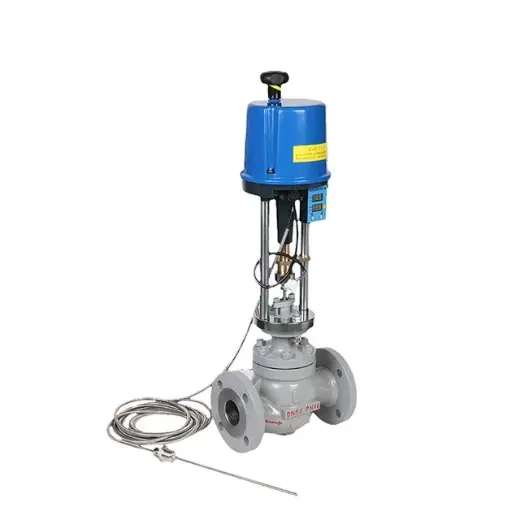
Temperature control is one of the most important aspects of industrial process management. Whether in heating systems, cooling circuits, steam pipelines, or chemical processing plants, maintaining stable fluid temperature is essential for ensuring product quality, system efficiency, operational safety, and energy savings. Among the many temperature regulation devices available today, electric temperature control valves have become one of the most widely adopted solutions due to their intelligent automation capabilities, precise control performance, and reliable operation.
An electric temperature control valve is an automatic regulating valve that adjusts fluid flow according to temperature changes detected by sensors within the system. The valve uses an electric actuator to control the opening and closing of the valve body, thereby regulating the amount of hot or cold fluid flowing through the pipeline. By continuously adjusting the flow rate, the system can maintain the desired temperature automatically without manual intervention.
With the rapid development of industrial automation and smart manufacturing technologies, electric temperature control valves are increasingly replacing traditional manual and pneumatic control systems. Their advantages include higher control accuracy, remote operation capability, lower maintenance requirements, and better compatibility with intelligent control systems such as PLC and DCS platforms.
This article explores the working principle, structure, advantages, applications, installation requirements, maintenance methods, and selection considerations of electric temperature control valves in modern industrial systems.
An electric temperature control valve is an automatic control device designed to regulate fluid temperature by adjusting the flow of heating or cooling media. It combines a valve body, electric actuator, controller, and temperature sensor into a complete automatic control system.
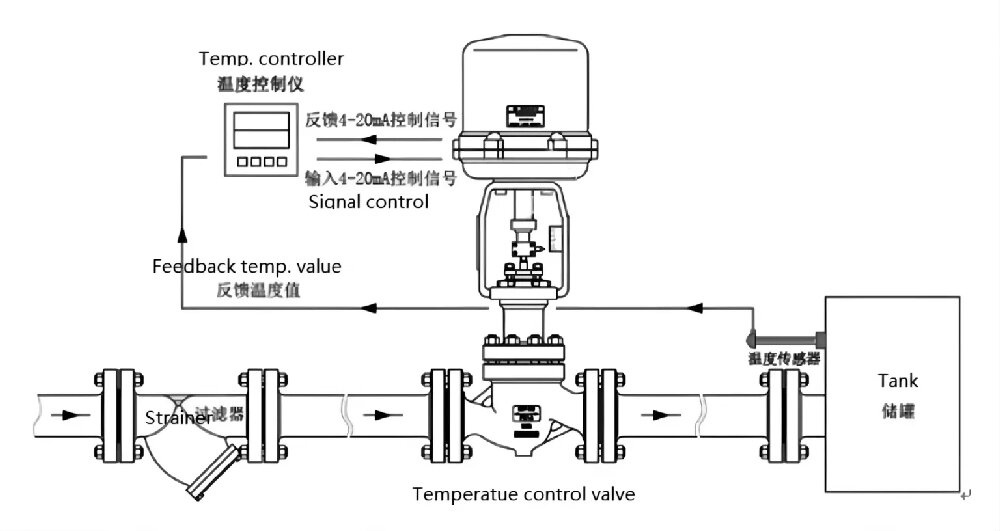
The valve receives temperature signals from sensors installed within the pipeline or process equipment. The controller compares the actual temperature with the preset target temperature. If a difference exists, the controller sends an electrical signal to the actuator, which adjusts the valve opening accordingly. This regulation changes the fluid flow rate or mixing ratio, enabling the system temperature to reach and maintain the desired value.
Electric temperature control valves are commonly used to control:
- Hot water flow
- Steam flow
- Chilled water circulation
- Thermal oil systems
- Air conditioning systems
- Industrial heating equipment
- Heat exchangers
- Boiler systems
These valves provide stable and continuous temperature regulation for both industrial and commercial applications.
An electric temperature control valve typically consists of several major components working together to achieve automatic temperature regulation.
The valve body is the primary structure through which fluid flows. It regulates the flow rate according to the movement of the valve plug or disc. Different valve body designs are available depending on the application requirements, including:
- Globe valve type
- Ball valve type
- Butterfly valve type
- Three-way mixing valve
- Two-way control valve
The valve body material can be selected according to the operating medium and environmental conditions. Common materials include:
- Cast iron
- Carbon steel
- Stainless steel
- Brass
- Bronze
- Duplex stainless steel
The electric actuator converts electrical signals into mechanical motion to operate the valve stem. It is one of the most important components of the system because it directly controls valve positioning accuracy.
Electric actuators may feature:
- Modulating control
- On/off control
- Intelligent positioning systems
- Manual override functions
- Torque protection
- Remote communication capability
Modern actuators often support digital communication protocols for integration into industrial automation systems.
The temperature sensor continuously monitors the actual temperature within the system and transmits data to the controller. Common sensor types include:
- PT100 resistance temperature detectors
- Thermocouples
- NTC thermistors
Sensor installation location is critical because inaccurate placement may result in incorrect temperature readings and unstable system performance.
The controller compares the measured temperature with the desired setpoint and generates control signals for the actuator. Advanced controllers may support:
- PID temperature regulation
- Programmable temperature settings
- Alarm functions
- Remote monitoring
- Energy optimization algorithms
The controller serves as the brain of the entire temperature control system.
The operation of an electric temperature control valve is based on a closed-loop feedback control system.
The process begins when the temperature sensor detects the current fluid or system temperature. This information is transmitted to the temperature controller. The controller compares the actual temperature with the preset target temperature.
If the measured temperature is lower than the desired value, the controller sends a signal to open the valve further, allowing more heating medium to enter the system. Conversely, if the temperature exceeds the target value, the controller reduces the valve opening to decrease the flow of heating medium or increase cooling flow.
The electric actuator adjusts the valve opening proportionally based on the controller signal. This continuous adjustment maintains stable and accurate temperature control.
For example, in a hot water heating system:
- Low room temperature causes the valve to open more.
- Increased hot water flow raises room temperature.
- Once the target temperature is reached, the valve partially closes.
- Stable temperature is maintained automatically.
This intelligent regulation improves system efficiency and minimizes energy waste.
Electric temperature control valves are available in various configurations depending on their application and flow control requirements.
A two-way valve controls flow through a single inlet and outlet. It regulates the amount of fluid entering a system and is commonly used in:
- Heating systems
- Cooling systems
- Boiler circuits
- Heat exchangers
A three-way valve features one inlet and two outlets or vice versa. It is used for mixing or diverting fluid flow.
Applications include:
- HVAC systems
- Temperature mixing systems
- Central air conditioning
- Chilled water systems
Three-way valves can improve temperature stability and energy efficiency in complex systems.
Electric ball valves use a rotating ball with a bore to control fluid flow. They offer:
- Fast operation
- Excellent sealing performance
- Compact structure
- Low pressure loss
These valves are suitable for water treatment, HVAC, and industrial automation systems.
Electric globe valves provide precise throttling control and are widely used in industrial process systems requiring accurate temperature regulation.
Advantages include:
- High control accuracy
- Stable regulation
- Good sealing performance
However, globe valves generally produce higher pressure drop than ball valves.
Electric temperature control valves offer numerous advantages over manual and pneumatic control systems.
Electric actuators enable precise valve positioning, resulting in highly accurate temperature regulation. Advanced PID controllers further improve system stability.
Automatic flow adjustment minimizes unnecessary heating or cooling, reducing energy consumption and operational costs.
Electric valves can be integrated into centralized control systems, enabling remote monitoring and operation through PLC, DCS, or SCADA systems.
Compared with pneumatic systems, electric control valves do not require compressed air systems, reducing maintenance complexity and operating costs.
Modern electric control valves support intelligent diagnostics, programmable control, and communication protocols for smart manufacturing applications.
Electric temperature control valves provide continuous and reliable operation with minimal temperature fluctuations.
They are suitable for various fluids, including:
- Water
- Steam
- Oil
- Air
- Chemical liquids
- Corrosive media
Electric temperature control valves are widely used across numerous industries due to their automation and precise regulation capabilities.
Heating, ventilation, and air conditioning systems use electric temperature control valves to regulate chilled water and hot water flow for indoor climate control.
Applications include:
- Commercial buildings
- Hospitals
- Hotels
- Shopping centers
- Office complexes
Industrial production processes often require stable heating temperatures for product quality and operational efficiency.
Common applications include:
- Textile manufacturing
- Food processing
- Chemical plants
- Plastic molding
- Pharmaceutical production
Boiler systems use electric temperature control valves to regulate steam or hot water flow, ensuring stable thermal output and improved energy efficiency.
Heat exchangers rely on accurate temperature regulation to optimize heat transfer efficiency.
Electric control valves help maintain:
- Stable outlet temperatures
- Energy savings
- Process consistency
Temperature control valves regulate heating systems in water treatment facilities and desalination plants.
Power generation systems use electric control valves in steam and cooling circuits for precise thermal management.
Chemical processes often require strict temperature control for reaction stability and product quality.
Electric temperature control valves are suitable for handling:
- Corrosive fluids
- High-temperature media
- Hazardous chemicals
Proper installation is essential for achieving optimal performance and long service life.
Temperature sensors should be installed in locations where fluid temperature changes can be accurately detected. Poor sensor placement may lead to inaccurate readings and unstable control.
Recommended practices include:
- Avoid dead zones in pipelines
- Install sensors in areas with stable flow
- Ensure sufficient immersion depth
The valve should be installed according to the manufacturer’s recommended flow direction and mounting position.
Improper installation may result in:
- Reduced control accuracy
- Increased wear
- Leakage problems
Electric actuators require stable electrical power to operate correctly. Voltage fluctuations may damage actuator components or affect performance.
Sufficient installation space should be reserved for maintenance, inspection, and actuator removal.
Valves should not be installed in areas with strong vibration unless proper vibration isolation measures are implemented.
Routine maintenance helps ensure long-term reliability and stable operation.
Regular Cleaning
Valve bodies and sensors should be cleaned periodically to remove dirt, scale, or debris that may affect measurement accuracy and valve movement.
Inspect the Electric Actuator
Regularly check:
- Motor condition
- Gear operation
- Wiring connections
- Position feedback signals
Early inspection helps prevent actuator failure.
Lubricate Moving Parts
Proper lubrication reduces friction and prolongs component lifespan.
Verify Sensor Accuracy
Temperature sensors should be calibrated regularly to maintain accurate control performance.
Check Seal Integrity
Inspect valve seals and packing components for leakage or wear.
Functional Testing
Periodic testing ensures the valve responds correctly to control signals and maintains proper temperature regulation.
Selecting the appropriate electric temperature control valve is critical for achieving reliable system performance.
The valve must support the operating temperature range required by the system.
Different applications may require:
- Low-temperature cooling control
- Medium-temperature HVAC regulation
- High-temperature industrial heating
Applications requiring high temperature stability should use valves with advanced modulation capability and precise positioning actuators.
Material compatibility is essential for durability and safety.
Common recommendations include:
- Stainless steel for corrosive or high-temperature media
- Cast iron for standard water systems
- Bronze or brass for clean water applications
The valve pressure rating must match the pipeline operating pressure.
The actuator and controller should support compatible control signals such as:
- 4–20 mA
- 0–10 V
- Modbus communication
- BACnet systems
Different valve flow characteristics affect control performance.
Options include:
- Linear flow
- Equal percentage flow
- Quick opening
Outdoor or harsh environments may require:
- Waterproof actuators
- Explosion-proof designs
- Corrosion-resistant coatings
As industrial automation continues to evolve, electric temperature control valves are becoming more intelligent, energy-efficient, and connected.
Smart Control Systems
Modern valves increasingly support intelligent diagnostics, predictive maintenance, and remote monitoring.
IoT Integration
Internet of Things technology enables real-time monitoring and cloud-based control for industrial temperature management systems.
Energy Optimization
Advanced algorithms help reduce energy consumption while maintaining precise temperature control.
Compact and Modular Designs
Manufacturers are developing smaller, lighter, and easier-to-install valve systems.
Improved Materials
New materials improve corrosion resistance, wear resistance, and operational lifespan.
AI-Based Process Optimization
Artificial intelligence technologies may further improve temperature regulation efficiency and predictive system control.
Electric temperature control valves play a vital role in modern industrial automation and temperature management systems. Their ability to provide accurate, automatic, and energy-efficient temperature regulation makes them essential for a wide range of industries, including HVAC, power generation, chemical processing, food production, pharmaceuticals, and water treatment.
By combining electric actuators, temperature sensors, intelligent controllers, and precision valve bodies, these systems achieve stable and reliable control of fluid temperatures under varying operating conditions.
Proper installation, routine maintenance, and careful valve selection are critical for ensuring optimal system performance and long-term reliability. As industrial technologies continue to advance, electric temperature control valves will become even smarter, more efficient, and more integrated into digital industrial automation systems.
With increasing demand for energy conservation, intelligent manufacturing, and automated process control, electric temperature control valves will continue to serve as a key technology for modern industrial temperature regulation.