Motorized 3-Way Control Valve: Precision Flow Regulation for Modern Process Industries
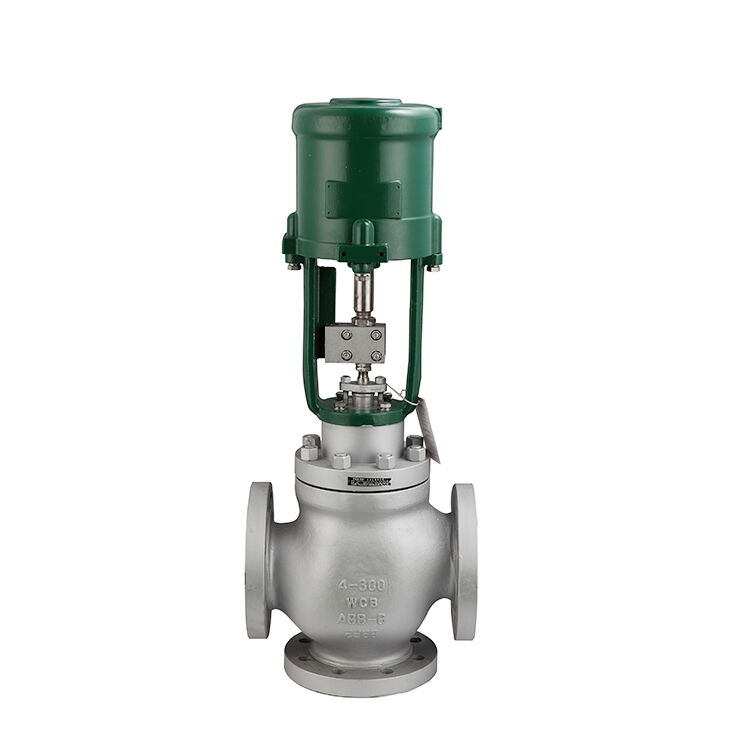
In today’s rapidly advancing industrial landscape, precision and efficiency in fluid control are more critical than ever. The motorized 3-way control valve, also known as an electric 3-way control valve, has become an indispensable component in automated systems that require accurate regulation of fluids such as water, steam, oil, and gas. These valves are designed for both mixing and diverting applications, offering flexible control solutions across diverse industries including petrochemical, HVAC, power generation, and water treatment.
Unlike conventional two-way control valves that regulate flow through a single inlet and outlet, a 3-way valve adds a third port, allowing it to either mix two separate flow streams into one outlet (mixing service) or divert a single inlet flow into two different outlets (diverting service). When paired with an intelligent electric actuator, this design provides a highly versatile control device capable of responding precisely to process demands, achieving stable temperature, flow, and pressure regulation in complex systems.
The electric 3-way control valve integrates two key elements: an electric actuator and a three-way valve body. The actuator—often a PSL series or 3810 series linear electric actuator—receives an input control signal, typically 4–20 mA DC or 1–5 V DC, and converts this electrical signal into linear motion to adjust the valve’s position. The actuator is powered by a standard AC supply and features a built-in servo amplifier, enabling automatic positioning and precise response to control signals.
This electronic integration allows the valve to modulate its opening degree, maintaining accurate control over process variables such as pressure, flow rate, temperature, and liquid level.
The valve body itself can be configured for either mixing (converging) or diverting (diverging) service:
Mixing Type (Converging): Two inlet ports combine flow into a single outlet. This design is commonly used when two different temperature fluids need to be blended to achieve a desired thermal output—such as in heat exchangers, HVAC systems, or steam regulation lines.
Diverting Type (Diverging): One inlet flow is divided into two outlet streams. This is ideal for applications requiring fluid distribution or alternating flow paths, such as cooling or lubrication circuits in industrial machinery.
For smaller nominal diameters and low differential pressure applications, the two designs can be interchangeable. However, for valves larger than DN100 or systems operating under high pressure differentials, the mixing and diverting types must be selected specifically for their intended function to ensure performance and safety.
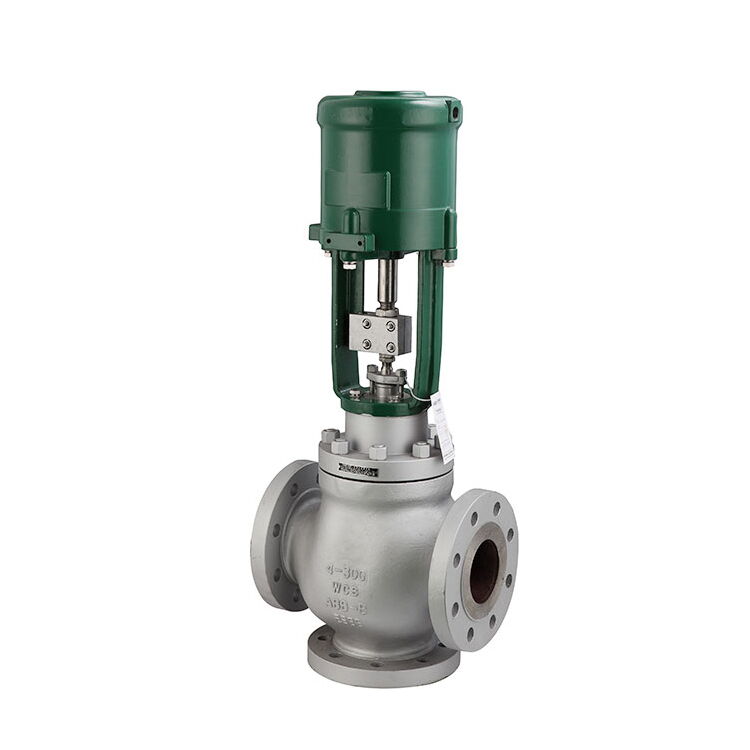
Modern motorized 3-way control valves are engineered to deliver reliability, accuracy, and ease of maintenance. Below are the defining features that make them stand out in automated process control environments:
The valve’s compact form factor minimizes space requirements in installation while ensuring easy handling and integration into existing pipelines. Despite its small size, the valve offers robust performance, capable of handling high pressures and temperatures with consistent precision.
Thanks to the precise servo control within the actuator, these valves exhibit highly sensitive response characteristics. The valve position changes smoothly and proportionally with the control signal, avoiding sudden surges or oscillations that could disrupt process stability.
The valve’s internal flow path is optimized to minimize pressure losses while maintaining a high Cv (flow coefficient). This means that even with a low pressure differential, the valve can handle substantial flow rates, ensuring energy-efficient operation.
Constructed from high-quality materials such as stainless steel, carbon steel, or bronze, the 3-way valve body is resistant to corrosion, erosion, and thermal stress. The trim design—often incorporating hardened seats and precision-machined plugs—ensures long-term sealing integrity and operational reliability, even in harsh conditions.
By integrating an electronic servo amplifier, the valve can achieve highly accurate modulation. The feedback system continuously monitors the valve position, automatically correcting any deviations to maintain the desired process variable within tight tolerances.
These valves can handle a wide range of fluids—liquids, gases, and steam—making them suitable for multi-industry use. Whether controlling the flow of cooling water, blending hot and cold fluids, or regulating process steam, they provide reliable and repeatable control.
The spool structure is designed with side guiding, which enhances operational stability and minimizes vibration. This results in quiet operation—a crucial advantage for noise-sensitive environments such as commercial buildings or laboratory facilities.
With standardized end connections and modular actuator interfaces, the valves can be installed and maintained with minimal downtime. The actuator’s self-diagnostic functions also simplify troubleshooting and predictive maintenance.
The distinction between mixing and diverting 3-way control valves is essential to their selection and application.
In this configuration, the valve has two inlets and one outlet. It combines two streams—often of differing temperatures or chemical compositions—into a single, uniform output. This type is widely used in systems such as:
Heat exchangers for maintaining stable outlet temperatures
HVAC mixing loops for regulating chilled and hot water distribution
Industrial reactors requiring precise mixture ratios of process fluids
The actuator modulates the valve plug positions so that the combined flow remains consistent and accurate, compensating automatically for changes in upstream conditions.
The diverting configuration features one inlet and two outlets, allowing the process fluid to be routed alternately or proportionally between two downstream paths. This design finds use in:
Cooling systems where flow alternates between heat exchangers
Lubrication and fuel systems requiring distribution to multiple circuits
Batch processing setups that send product streams to different stages
Although the internal flow path differs, both types share the same high-performance actuator technology and precise control capability.
The electric actuator is the heart of a motorized 3-way control valve system. Modern actuators like the PSL and 3810 series are microprocessor-controlled, ensuring responsive and intelligent operation.
The actuator continuously monitors its position via internal sensors and adjusts based on the control signal to ensure accurate modulation.
Advanced electronics allow automatic calibration and detection of faults or overloads, preventing system failure.
In case of power loss, manual operation ensures process continuity and safety.
Actuators can be configured to work with standard process control systems, accepting common input signals such as 4–20 mA or 1–5 V.
Electric actuators are favored for their clean, low-maintenance operation compared to pneumatic systems, which require air compressors and additional piping. They also offer higher positioning accuracy, making them ideal for fine control applications.
The durability and performance of a 3-way control valve depend heavily on the materials used. Typical construction materials include:
Body: Cast or forged carbon steel, stainless steel (CF8, CF8M), bronze, or special alloys for corrosive media.
Trim (Seat, Plug, and Stem): Hardened stainless steel, 17-4PH, or other wear-resistant materials to ensure tight sealing and longevity.
Seals and Packing: PTFE, RPTFE, or graphite-based materials depending on temperature and chemical compatibility.
These material options enable the valve to withstand pressures up to PN40 or higher and temperatures exceeding 400°C, depending on design specifications.
The versatility of motorized 3-way control valves makes them integral to a broad range of industrial and commercial applications.
Used in heat exchanger temperature control, steam regulation, and gas blending systems, these valves ensure precise thermal balance and pressure management, improving process stability and energy efficiency.
In power plants, they regulate the flow of steam and cooling water in turbines, condensers, and auxiliary systems, contributing to safe and efficient power output.
In heating, ventilation, and air conditioning systems, the valves mix or divert chilled and hot water to maintain optimal comfort levels in large facilities while reducing energy consumption.
Precise flow modulation is crucial in chemical reactions. Motorized 3-way control valves are employed to control the flow of reactants and maintain consistent process temperatures.
Used for flow distribution, pH control, and chemical dosing systems, these valves ensure stable treatment efficiency and system reliability.
In sanitary configurations, 3-way control valves manage the flow of cleaning fluids, ingredients, and temperature control in pasteurization and fermentation processes.
Choosing the right motorized 3-way control valve requires careful evaluation of process conditions and control requirements. Important factors include:
Flow Capacity (Cv) and differential pressure
Medium type (liquid, gas, steam, or corrosive fluids)
Temperature and pressure ratings
Connection type (flanged, threaded, or welded)
Control signal type and actuator compatibility
Maintenance accessibility and service environment
Proper sizing and configuration not only improve control precision but also extend the valve’s operational life and reduce maintenance costs.
While pneumatic valves are still widely used, electric motorized valves are gaining popularity for their technological advantages:
Higher positioning accuracy and repeatability
No need for air compressors or piping, reducing installation cost
Lower operational noise and cleaner energy use
Easier integration with digital control systems (DCS/PLC)
Built-in fail-safe and diagnostic features
These benefits make electric 3-way control valves especially suitable for industries moving toward smarter, automated, and energy-efficient solutions.
The motorized 3-way control valve represents a sophisticated and reliable solution for modern process automation. With its dual functionality for mixing and diverting, precision electric actuation, and durable construction, it provides unmatched flexibility across a broad range of applications—from thermal control in oil refineries to energy-efficient HVAC systems in commercial buildings.
As industries increasingly adopt smart control systems and digital monitoring, the demand for electric 3-way control valves continues to grow. Their ability to combine intelligent control, mechanical robustness, and energy efficiency positions them as a key component in the next generation of automated process technologies.
As a leading manufacturer of high-performance control valves in China, we continue to develop advanced motorized 3-way control valves that meet global standards for quality, safety, and reliability—empowering industries worldwide to achieve greater efficiency, precision, and sustainability.