Pneumatic Actuated Ball Valve: Precision Control for Modern Industries
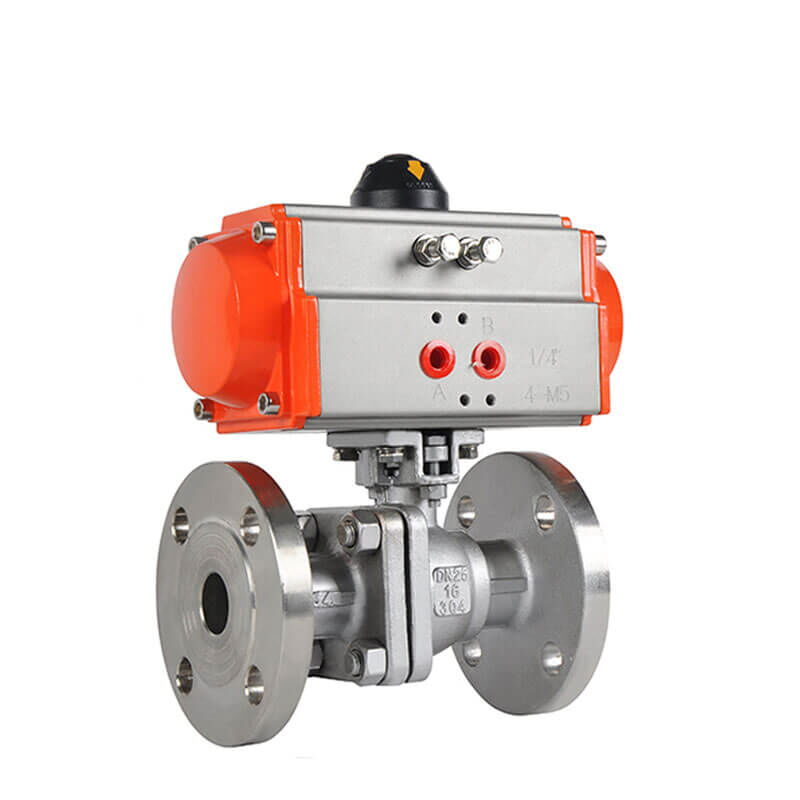
In modern industrial automation, pneumatic actuated ball valves play an essential role in regulating the flow of liquids and gases. From petrochemical plants and power generation systems to food processing lines and wastewater facilities, these valves are known for their efficiency, reliability, and precise flow control. By combining the strength of pneumatic actuation with the simplicity of ball valve design, they offer one of the most dependable solutions for automated fluid management.
A pneumatic actuated ball valve consists of two main components — the pneumatic actuator and the ball valve itself. The actuator uses compressed air to rotate the valve’s ball element, which controls fluid passage through the system. The integration of these two parts creates a powerful tool capable of operating under demanding industrial conditions, providing rapid, repeatable, and safe control of process media.
A pneumatic ball valve is constructed with several key components designed for high durability and operational consistency:
Ball Valve Body: Usually made from stainless steel, carbon steel, or brass, the body houses the ball and seals. The material is selected based on the type of fluid, temperature, and pressure in the system.
Ball and Seat: The central ball component has a hollow core, allowing fluid to pass when aligned with the pipeline. The seat ensures a tight shutoff when the ball is rotated 90 degrees.
Stem and Seals: The stem connects the actuator to the ball. Proper sealing around the stem prevents leakage of pressurized gases or liquids.
Pneumatic Actuator: This is the driving force behind the valve. It uses compressed air to rotate the ball, usually in a quarter-turn (90°) motion, to either open or close the valve.
The actuator and valve body are typically mounted together using an ISO 5211 flange connection, allowing for easy interchangeability between different actuator models. Common flange patterns include F03, F04, F05, and others, depending on the torque and size requirements. Ensuring that both actuator and valve have matching flange patterns is essential for safe and reliable operation.
Pneumatic actuators can be classified into single-acting and double-acting types:
This design uses compressed air to move the ball in one direction (usually to open or close the valve), while a spring returns it to its default position when air pressure is removed. This type is ideal for safety-critical systems requiring a “fail-safe” function, ensuring the valve returns to a known position during power or air loss.
A double-acting actuator uses compressed air for both opening and closing movements. It offers faster actuation and is generally more efficient in applications where a fail-safe feature is unnecessary.
Both configurations are widely used depending on system requirements, available air supply, and safety protocols.
The operation of a pneumatic actuated ball valve follows a simple yet effective principle:
A control signal (from a PLC, manual switch, or control system) activates the pneumatic actuator.
Compressed air is directed into one side of the actuator, creating pressure against an internal piston or vane.
The pressure causes the actuator to rotate its shaft, which in turn rotates the ball inside the valve.
When the hollow ball bore aligns with the pipeline, fluid flows freely. When rotated 90°, the bore is perpendicular to the line, completely stopping flow.
This quarter-turn motion provides fast and accurate shutoff, typically within a second or less. The simplicity of the mechanism makes pneumatic ball valves one of the most cost-effective automation options compared to electric or hydraulic systems.
Pneumatic actuators respond instantly to control signals, providing near-instant opening and closing of the valve. This rapid response time is particularly advantageous in emergency shutdown systems, batch processing, and automated manufacturing lines.
Designed for continuous use in harsh environments, these valves withstand high pressure, temperature fluctuations, and corrosive media. Stainless steel pneumatic ball valves, for instance, can handle aggressive chemicals or seawater without degradation.
With few moving parts and robust sealing, pneumatic actuated ball valves require minimal maintenance. Routine inspections of air supply and seals are often sufficient for long-term reliability.
They integrate seamlessly with modern automation systems. By connecting to a solenoid valve, positioner, or limit switch, pneumatic ball valves can be fully automated and monitored remotely.
Available in two-way, three-way, and multi-port configurations, these valves can control, divert, or mix process flows, offering flexibility across multiple industries.
Compared to electric actuators, pneumatic actuators offer a lower initial cost for larger-diameter valves and perform well in environments with readily available compressed air.
Because of their reliability and adaptability, pneumatic actuated ball valves are widely used across numerous sectors:
Oil and Gas: For controlling the flow of crude oil, natural gas, and chemical feedstocks in processing and refining operations.
Water and Wastewater Treatment: To regulate and isolate water flow during treatment, filtration, or distribution processes.
Pharmaceutical and Food Industries: Hygienic pneumatic valves with stainless steel construction ensure contamination-free operations.
Power Generation: Used in steam, condensate, and cooling water systems for precise and safe control.
HVAC and Building Automation: For managing air and water flow in automated climate systems.
Chemical Processing: Resistant to aggressive fluids and solvents, ideal for precise metering and control of reactive substances.
To ensure global compatibility and safety, pneumatic actuated ball valves are designed in accordance with recognized international standards such as:
ISO 5211: Defines mounting interface dimensions between actuator and valve.
ASME B16.34: Covers design, pressure-temperature ratings, and testing requirements for valves.
API 6D / API 608: Governs ball valve construction for pipeline and general industrial applications.
Common materials include:
Stainless Steel (CF8M / 316): Ideal for corrosive or hygienic environments.
Carbon Steel (A105 / WCB): Suitable for high-pressure applications.
Brass or PVC: Used for general-purpose low-pressure systems.
Sealing materials like PTFE, RPTFE, or Viton are selected based on chemical compatibility and temperature range, ensuring leak-free performance and extended service life.
Proper installation of pneumatic actuated ball valves is crucial to maintain efficiency and prevent damage. Here are key best practices:
Check Compatibility: Ensure valve material, pressure rating, and connection type match system requirements.
Mount Securely: Align actuator and valve flanges according to ISO 5211 to prevent torsion stress.
Air Supply Quality: Use clean, dry, and regulated air at the specified pressure range (typically 4–8 bar).
Directional Flow: Verify the correct installation orientation based on flow direction markings.
Testing: Perform leak and function tests before commissioning.
During operation, periodic inspection of actuator seals, air lines, and limit switches helps prevent performance degradation and ensures continued reliability.
These are the most common configuration, designed with a straight-through flow path for simple on/off control. They are widely used for isolation purposes in process lines.
These valves feature an L- or T-shaped port, allowing fluid to be diverted or mixed between multiple pipelines. They’re especially useful in applications requiring flow direction changes without needing multiple valves.
While pneumatic ball valves are highly dependable, preventive maintenance ensures optimal performance.
Inspect seals and replace them if signs of wear appear.
Verify that air lines are clean and moisture-free.
Test actuator response time and functionality regularly.
Air Leakage: Often due to worn O-rings or loose fittings.
Slow Actuation: Caused by low air pressure or debris in the actuator.
Valve Not Fully Closing: Possible obstruction or seat damage.
By addressing these issues promptly, downtime can be minimized and system reliability improved.
While both types provide automation, each has distinct advantages depending on the application:
Feature | Pneumatic Actuated | Electric Actuated |
Speed | Very fast operation | Slower response |
Power Source | Compressed air | Electricity |
Environment Suitability | Safer in explosive atmospheres | Requires explosion-proof design |
Maintenance | Simple and robust | Higher complexity |
Fail-Safe Option | Easy with spring return | Requires backup power |
Pneumatic options are often favored in hazardous or remote areas where air supply is available, while electric versions are chosen where precise modulation and feedback are required.
Safety is critical when dealing with compressed air and automated valve systems. Key safety tips include:
Always depressurize the system before performing maintenance.
Use lock-out/tag-out procedures to prevent accidental activation.
Ensure proper ventilation and avoid over-pressurization.
Regularly inspect actuator springs and seals for fatigue or corrosion.
Proper training of operators and adherence to manufacturer instructions significantly enhance safety and reduce operational risks.
As industrial automation evolves, pneumatic actuated ball valves are also advancing. Emerging trends include:
Smart Positioners and Sensors: Integration of IoT-enabled feedback systems for real-time monitoring.
Energy-Efficient Actuators: Reduced air consumption models that enhance sustainability.
Compact Modular Designs: Lighter and smaller actuators for easier installation and maintenance.
Advanced Materials: Use of composite materials and high-performance polymers for enhanced corrosion resistance.
These innovations ensure that pneumatic valves continue to meet the increasing demands for precision, safety, and efficiency in modern process industries.
Pneumatic actuated ball valves remain a cornerstone of industrial automation, offering fast, reliable, and cost-effective flow control for a wide range of applications. Their robust design, simple operation, and compatibility with automated systems make them indispensable in industries where precision and reliability are paramount.
Whether controlling water, gas, steam, or chemicals, pneumatic actuated ball valves deliver consistent performance under demanding conditions. As technology continues to evolve, the integration of smarter controls and advanced materials promises even greater efficiency and durability, securing their role in the future of industrial fluid management.
