How CPVC Electric Ball Valves Improve Control in Corrosive Systems
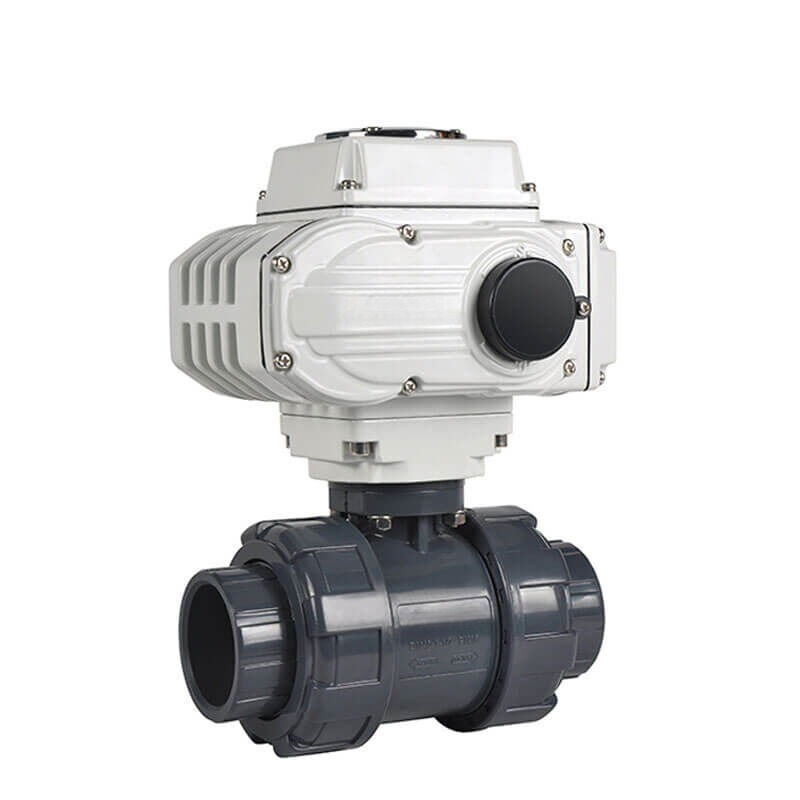
In today’s rapidly evolving industrial landscape, automation, safety, and material reliability are no longer optional—they are essential. Industries ranging from water treatment and chemical processing to semiconductor manufacturing and commercial infrastructure increasingly rely on automated valve solutions to improve efficiency, accuracy, and operational safety. Among these solutions, CPVC electric actuated ball valves have gained widespread recognition as a dependable and cost-effective option for handling corrosive fluids and temperature-sensitive media.
By combining the chemical resistance and thermal stability of CPVC (Chlorinated Polyvinyl Chloride) with the precision and convenience of electric actuation, these valves offer a modern approach to fluid control. They address many of the limitations associated with traditional metal valves while meeting the growing demand for intelligent, remotely controlled systems.
This article provides an in-depth exploration of CPVC electric actuated ball valves, examining their material advantages, design structure, operating principles, performance characteristics, applications, and future trends in industrial automation.
As industrial processes become more complex, manual valve operation is increasingly seen as inefficient and unreliable. Modern facilities demand:
Precise control of flow and isolation
Remote operation and monitoring
Reduced labor and maintenance costs
Enhanced safety for operators
Consistent performance under harsh conditions
Electric actuated valves have become a cornerstone of this transition, enabling seamless integration with PLCs, DCS platforms, and building management systems. When paired with corrosion-resistant materials such as CPVC, these valves become particularly valuable in challenging environments.
CPVC is produced by chlorinating PVC resin, increasing the chlorine content and significantly improving the material’s physical and chemical properties. This transformation results in a thermoplastic that offers superior performance compared to standard PVC.
Key enhancements include:
- Higher maximum operating temperature
- Improved tensile strength
- Greater resistance to chemical attack
- Better fire resistance
These properties make CPVC suitable for industrial systems that operate beyond the limits of conventional plastic piping and valves.
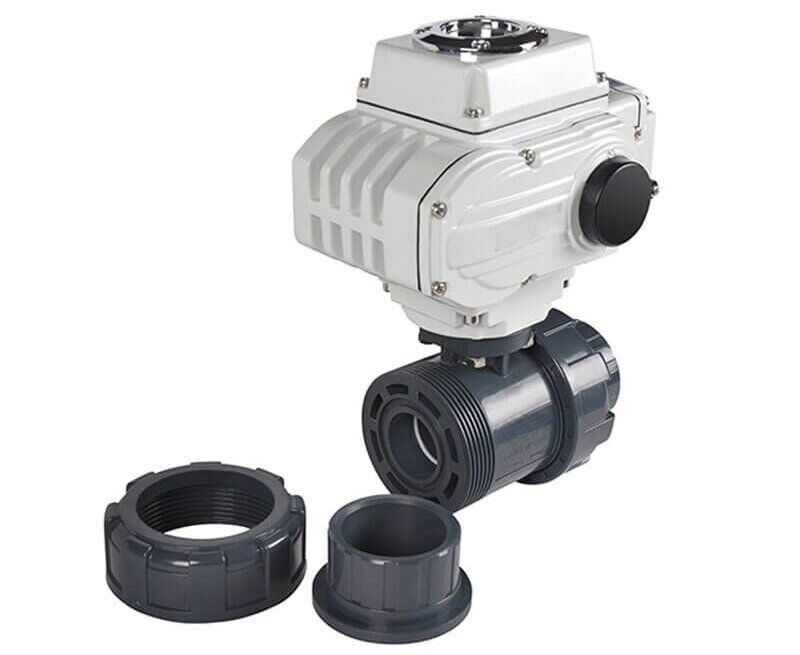
CPVC exhibits excellent resistance to a wide range of corrosive substances, including:
Strong acids and bases
Chlorinated water and oxidizing agents
Industrial solvents and cleaning chemicals
Additionally, CPVC can typically handle continuous operating temperatures of up to 90–95°C, making it suitable for hot water and chemical process applications where PVC would soften or fail.
A CPVC electric actuated ball valve integrates a CPVC ball valve body with an electric actuator to achieve automated flow control. These valves are primarily used for on/off isolation, though modulating versions are available for applications requiring variable flow control.
Typical Valve Configurations
Two-piece and three-piece body designs
Full-port and reduced-port options
Socket, threaded, flanged, or union end connections
Compact quarter-turn operation
These configurations allow flexibility in system design and installation.
CPVC Valve Body and Internal Parts
The valve body is injection-molded or machined from high-grade CPVC material and includes:
Ball: Smooth, precision-machined CPVC or reinforced polymer
Seats: PTFE or modified PTFE for tight sealing
Stem: CPVC or stainless steel (isolated from media)
Seals: EPDM or FKM O-rings depending on application
The smooth internal surfaces reduce turbulence and pressure drop while preventing scale and residue buildup.
The electric actuator is responsible for driving the valve between open and closed positions. It typically includes:
- Electric motor
- Gear reduction system for torque amplification
- Mechanical limit switches
- Visual position indicator
- Manual override for emergency operation
Actuators are available in various enclosure ratings, such as IP65, IP67, and NEMA-rated housings, ensuring reliable performance in indoor and outdoor environments.
The operation of a CPVC electric actuated ball valve is based on a quarter-turn (90-degree) rotation:
A control signal is sent from the control system.
The electric motor activates and drives the gear train.
The valve stem rotates the ball inside the valve.
The flow path is either aligned (open) or blocked (closed).
Limit switches stop the motor at the correct position.
Advanced actuators can provide:
- Position feedback signals
- Modulating control (4–20 mA or 0–10 V)
- Network communication via Modbus or other protocols
This enables seamless integration into modern automation architectures.
CPVC electric actuated ball valves are generally designed for low- to medium-pressure systems, with typical pressure ratings including:
- PN10
- PN16
- ANSI Class 150 (depending on size and design)
They are ideal for liquid handling rather than high-pressure gas systems.
Thanks to CPVC’s thermal stability, these valves can operate reliably in systems handling:
- Hot water
- Heated chemical solutions
- Temperature-fluctuating process fluids
This makes them suitable for industrial processes where thermal cycling is common.
Unlike metal valves, CPVC valves do not rust, corrode, or suffer from galvanic reactions. This dramatically extends service life in aggressive environments.
Electric actuation eliminates the need for manual operation, enabling centralized control, faster response times, and reduced operator exposure to hazardous media.
Although the initial cost may be higher than manual valves, the long-term savings in maintenance, downtime, and labor make CPVC electric actuated ball valves highly economical.
CPVC valves are significantly lighter than metal alternatives, reducing installation time and structural support requirements.
CPVC does not leach metals or contaminants, making these valves ideal for high-purity and sensitive applications.
CPVC electric actuated ball valves are extensively used in:
- Chlorination systems
- Chemical dosing lines
- Filtration and backwash circuits
- Desalination and reverse osmosis plants
Their resistance to chlorine and treatment chemicals ensures long-term reliability.
In chemical plants, these valves are used for:
- Acid and alkali transfer
- Chemical mixing systems
- Storage tank isolation
Electric actuation enhances safety by minimizing direct human interaction.
High-purity CPVC valves are critical in:
- Ultrapure water (UPW) systems
- Cleanroom fluid handling
- Chemical delivery lines
Their non-metallic construction prevents contamination of sensitive processes.
In commercial buildings, CPVC electric actuated ball valves are increasingly used in:
- Chilled and hot water distribution
- Cooling towers
- Automated HVAC control systems
Their compatibility with building management systems supports energy efficiency initiatives.
These valves enable precise control of water and nutrient flow in automated irrigation systems, improving crop yields and resource efficiency.
CPVC offers superior corrosion resistance in chemical applications
Lower weight and cost in many systems
Stainless steel preferred for high-pressure or high-temperature services
Electric actuators do not require compressed air
Lower infrastructure and operating costs
Easier integration with electrical control systems
CPVC electric actuated ball valves are engineered to deliver dependable, long-term performance while keeping maintenance requirements to a minimum. Thanks to the inherent corrosion resistance of CPVC and the sealed design of modern electric actuators, these valves are well suited for continuous operation in demanding industrial environments. Unlike metal valves, CPVC valves do not suffer from rust, scaling, or chemical degradation, which significantly reduces the likelihood of premature failure and unplanned downtime.
Routine maintenance is generally straightforward and can be integrated into regular plant inspection schedules. Typical checks include verifying proper actuator operation to ensure smooth and accurate valve movement, confirming the integrity of electrical connections and control signals, and inspecting sealing components such as O-rings and seats during planned shutdowns. Because the valve’s internal components are not exposed to corrosion, wear on critical parts is usually minimal.
When correctly selected, installed, and operated within recommended pressure and temperature limits, CPVC electric actuated ball valves can achieve a service life that extends well beyond ten years. Their long operational lifespan, combined with low maintenance demands, makes them a cost-effective and reliable solution for automated flow control in chemical processing, water treatment, and industrial systems.
Modern CPVC electric actuated ball valves are manufactured in accordance with international standards and often comply with:
ISO mounting standards
CE certification
RoHS environmental requirements
Optional safety features include manual override, locking devices, and fail-safe configurations.
As industries move toward smart manufacturing and digital infrastructure, CPVC electric actuated ball valves are evolving to meet new demands. Future trends include:
Smart actuators with diagnostic capabilities
IoT-enabled monitoring and predictive maintenance
Improved sealing technologies
Expanded pressure and temperature capabilities
Global demand is expected to grow steadily, driven by water scarcity, stricter environmental regulations, and increased automation.
The CPVC electric actuated ball valve stands as a reliable, efficient, and forward-looking solution for automated fluid control in corrosive and high-purity environments. Its unique combination of material durability, automation capability, and cost efficiency makes it an indispensable component in modern industrial systems.
As industries continue to prioritize safety, efficiency, and sustainability, CPVC electric actuated ball valves will play an increasingly important role in shaping the future of flow control technology. For applications where corrosion resistance and automation are critical, these valves offer a proven and dependable solution.